In the early days of the Maryland colony, it was by no means clear that the colonists would be able to make a living from the land. Seventeenth century advertisements designed to attract British settlers promoted Maryland as a place where “the land is good, the ayre wholsome and pleasant… fresh water, and wood there is in great plenty,” but in reality farmers often struggled to produce enough food to avoid starvation. In the 1660s, fortunes changed when Maryland settlers began to exploit enslaved African labor and to focus on growing tobacco as a profitable crop. During the next century, the eastern shore counties of Maryland were part of a profitable “Tobacco Coast” organized around the southern Maryland ports along the Chesapeake Bay. Maryland. Plantations in Maryland produced approximately forty percent of all the tobacco exported to Britain in the eighteenth century.1

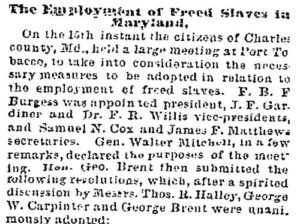
Since the success of agriculture in Maryland was dependent on the labor of enslaved people, Maryland plantation owners viewed the elimination of slavery as an existential threat. An update to the Maryland Constitution passed in 1851 forbade “any law abolishing the relation of master or slave, as it now exists in this State” (Art. 3, sec. 43). When the conclusion of the Civil War forced the abolition of slavery, landowners responded with a variety of measures intended to maintain white control over Black workers. Just three weeks after slavery was abolished, white landowners in Charles County and Prince George’s County organized a system of wage controls they urged all white farmers throughout the state to adopt. Responding to what they viewed as the unacceptable elimination of the “domestic relation of master and slave,” the farmers set a wage rate not to exceed $120 per year for Black men, an amount that was roughly a third lower than prevailing wages for white farm workers at the time. Black women were to be paid $60 per year if they had no children. Women with children were to be paid only in room and board.2
Many newly emancipated people were eager to escape the oppressive social and financial conditions associated with farmwork in rural areas and they moved to Baltimore City and Washington D.C. seeking other kinds of employment. Edward O’Brien, a Freedmen’s Bureau official in St. Mary’s County, Maryland, observed that Black workers “would rather work for three dollars a month in Washington and Baltimore than…work for the traitors here for twelve.” In response to the labor shortage, white farmers resorted to seizing Black children and forcing them into unpaid agricultural work as “apprentices” under an 1860 law that allowed white employers to take custody of Black children whose parents were deemed to be financially unable to support them. At least three thousand children were seized within days of emancipation and parents faced a long and frequently fruitless court process to seek their return until the system was finally abolished in 1868.3
In the immediate post-emancipation period, the “afterlife of the plantation” could be seen not only in attempts to limit wages for farm workers, but also in exploitative sharecropping and tenant-farming arrangements that were common in Maryland. White landowners decided which crops to plant, giving Black farmers little ability to respond to market conditions. With limited capital available to them, Black farmers took on debt to plant crops and often could not repay it. In 1867, Joseph Hall, a white farmer in Calvert County, observed that at the end of the season, the Black farmer “has nothing, and the landlord has all, and many times . . . [the Black farmer is] left in debt besides.” With the balance of power tipped firmly toward white landowners, many sharecropping and tenant-farming arrangements failed when landowners refused to honor the terms of the contract. William VanDerlip, a Freedmen’s Bureau officer for Calvert and Anne Arundel Counties, noted that so many Black farmers were cheated in 1865 that they refused sharecropping arrangements in 1866 and the “planters were compelled to rent them sections of their farms at stipulated prices.”.4
Despite these oppressive conditions, a substantial number of Black farmers did see potential in maintaining an agricultural livelihood. Sometimes, an urban bias in historical analysis causes observers to view the decision to continue farming as less desirable than other options. However, maintaining a rural farming livelihood was a viable economic path and in the nineteenth and early twentieth centuries farming also symbolized a possibility of self-sufficiency. Many Black political leaders promoted that perspective. In an address delivered at Bethel AME church in Baltimore, Frederick Douglass praised the possibilities of farming life:
I would advise those living in the lower counties of Maryland to stick to their agricultural pursuits. I believe $150 in the country is better than $400 in the city. There they can live more economically, and there are not so many temptations to lead them astray. If the colored people of Maryland flock to this city, crowding alleys and by-streets, woe betide them! Sad indeed will be their fate. They must stick to the country, and work. They must be saving of their funds, and endeavor to buy land. They must continually strive to become landholders.5
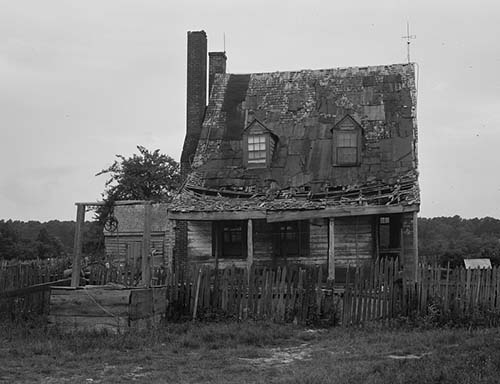
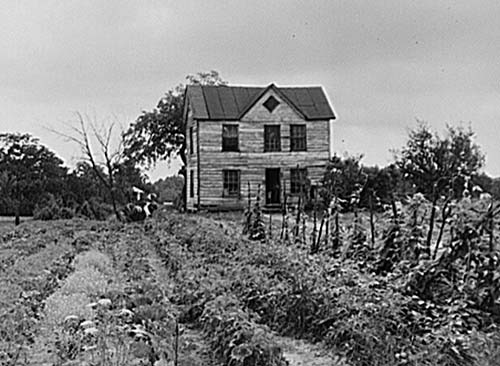
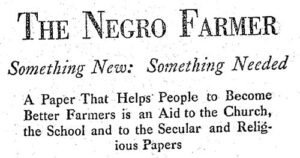
Starting in the late 1800s, activist networks of Black politicians, religious leaders, and farmers organized institutional structures to support Black farmers. The most well-known were the agricultural education programs at the Tuskegee Institute (now Tuskegee University), Hampton Agricultural and Industrial School (now Hampton University), and the 1890 land-grant institutions. In addition, these activist networks organized annual conferences for Black farmers, circulated educational materials related to agricultural techniques, and formed mutual-aid organizations like the Colored Farmers Alliance that boasted nearly a million members. In Maryland, the Maryland Industrial and Agricultural Institute, founded by Black church leaders with connections to the Tuskegee Institute, was a local example of this kind of organizing.6
As the value of farms, particularly tobacco farms, declined after the Civil War, some Black farmers succeeded in purchasing land. In the years 1860–1870, Black land ownership in Maryland increased most rapidly in the counties of the former Tobacco Coast. The early 1900s were the high point for Black farming and farm ownership in the United States. In 1900, there were roughly 750,000 Black farmers in the United States, thirteen percent of the total. Charles E. Hall, a statistician for the U.S. Census Bureau who specialized in research related to Black-owned businesses, described Black farmers as “our Big Business Men,” noting that if Black-owned farms were converted into cash, “there would be approximately one hundred million dollars left after purchasing every church edifice, parsonage, fraternal building, newspaper, or printing plant, drug store and moving picture theater owned by members of our group.”7
Unfortunately, even as Charles Hall was making this observation the number of Black farmers was collapsing. Nationwide, Black-owned or operated farms have historically been smaller, on average, compared to white-owned farms, but the amount of farmland required to generate a profit steadily increased during the twentieth century. Financial difficulties for Black farmers were compounded by discrimination that made it difficult to access business capital. Banks and the United States Department of Agriculture, a major source of farm funding, systematically discriminated against Black farmers throughout the twentieth century. Lack of access to capital caused many Black-owned farms to fail and hundreds of thousands of acres of Black-owned farmland was subsequently purchased by white farmers, a transfer of wealth worth at least $3.7 billion. Lack of clear land title among descendants of the original landowner also contributed to a large amount of Black-owned farmland passing into the possession of white land developers, a phenomenon known as heir’s property.8
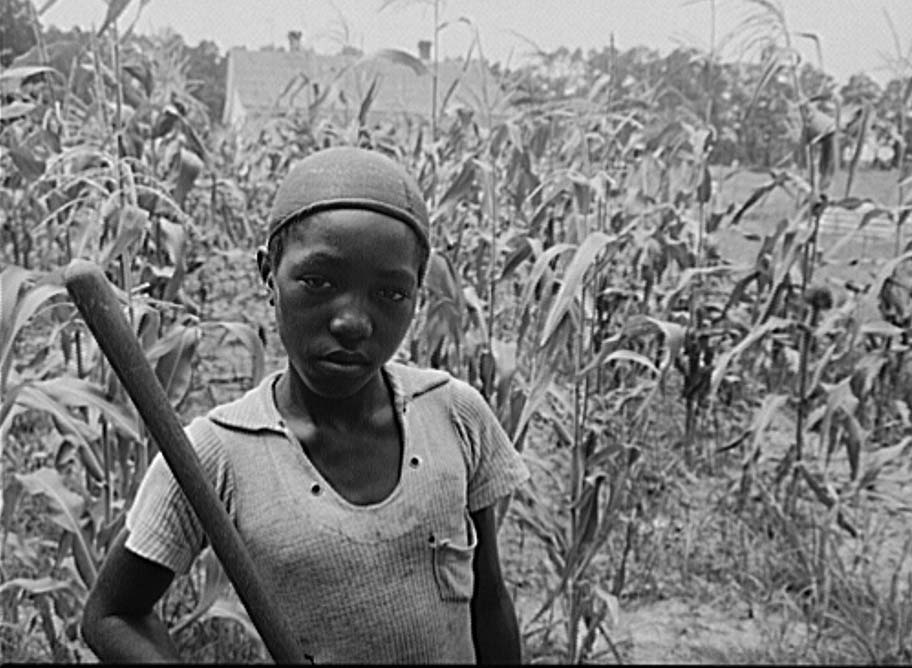
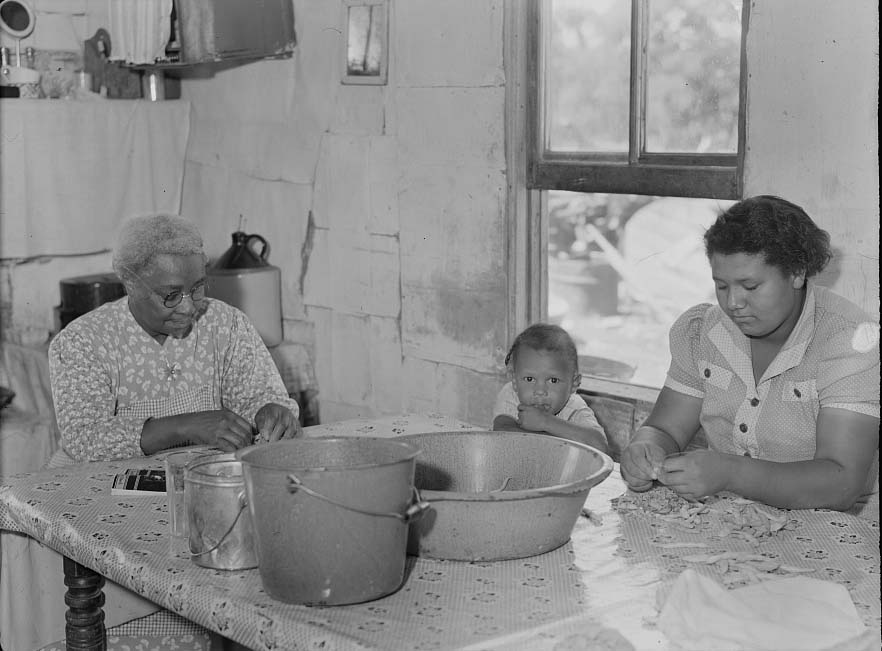
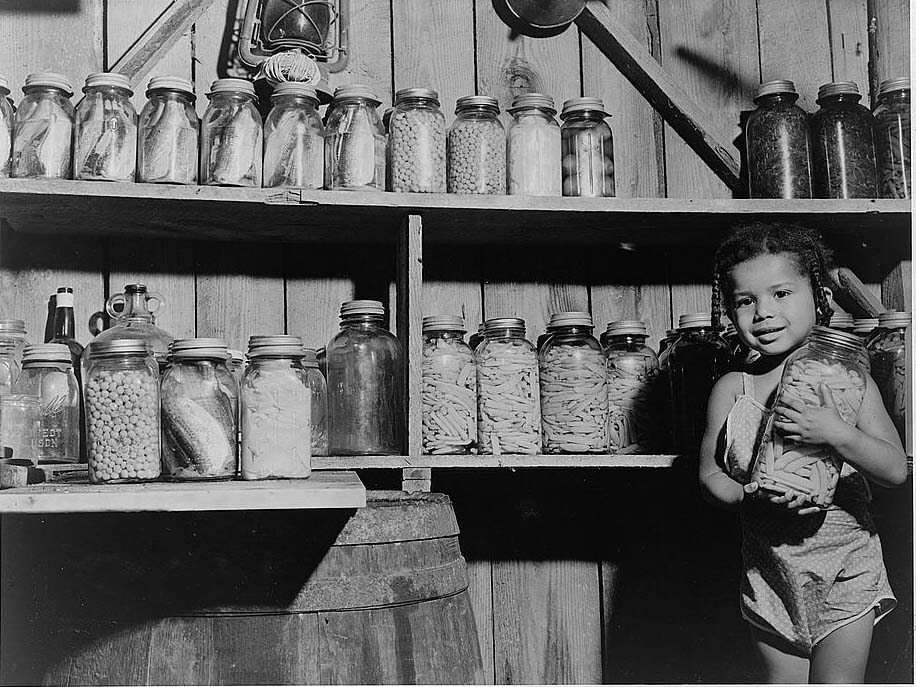
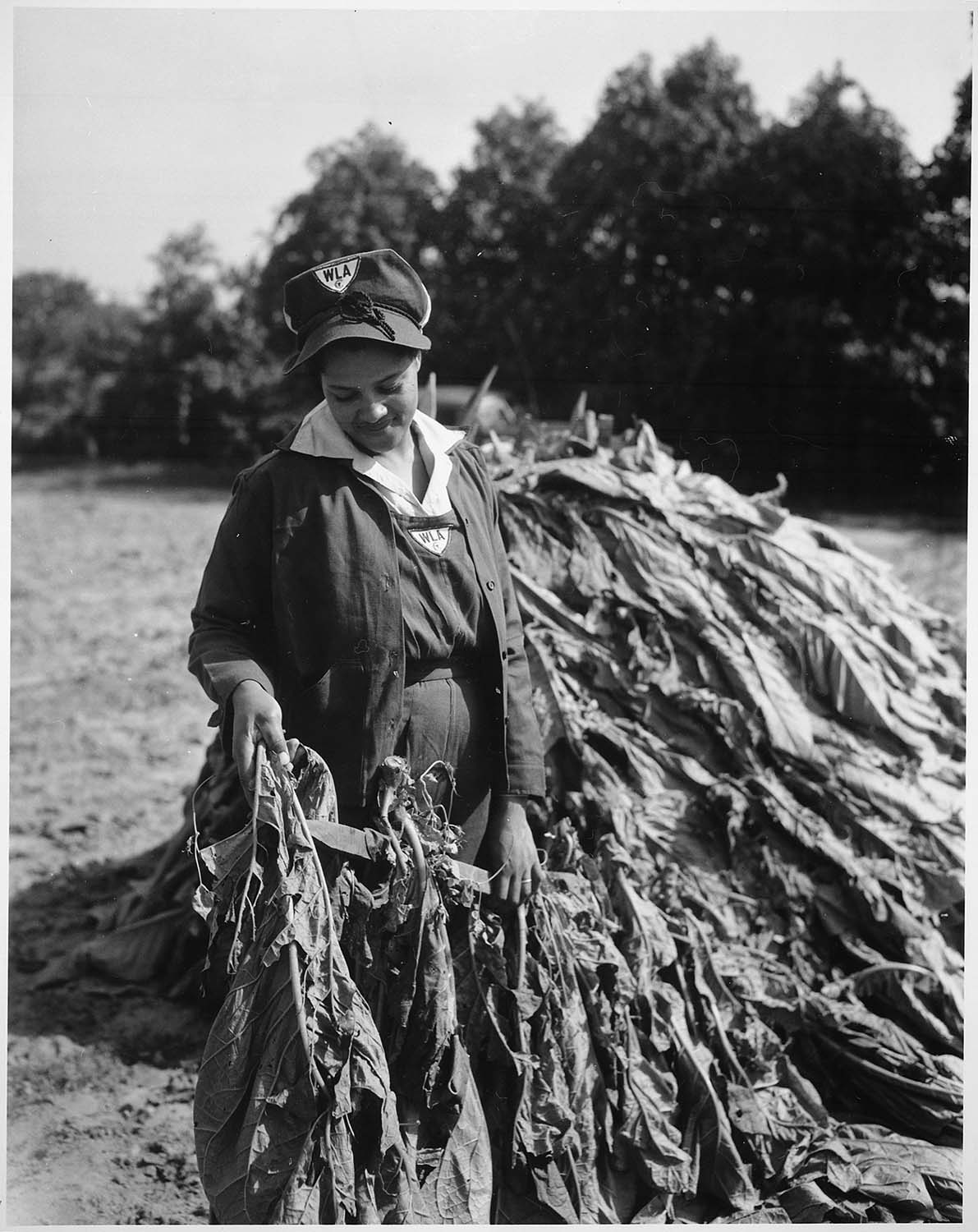
By the 1980s, the number of farms owned or operated by Black farmers was reduced to roughly 20,000. Historian Peter Daniel has emphasized the racial disparity responsible for this dispossession. “If African American farmers had left agriculture at the same rate as white farmers since 1920,” he observed, “there would still be 300,000 left.” Consistent with the national trend, the number of Black farmers in Maryland peaked in 1910 at just over 6,300, which was thirteen percent of all farmers. Most of the Black farm owners in Maryland acquired their land prior to the turn of the century. By the 1980s, only 371 Black farmers can be identified in Maryland census records, a loss of 94 percent. Almost all the remaining farms, more than 90 percent, had annual sales of less than $20,000.9
The weight of this historical context can be seen today in complex views about farming in Black communities. As Rev. Dr. Heber Brown III has observed:
The African American community has suffered so much from disconnection to the land…There are stories in our community of families being run off their land by the KKK. The trauma associated with things like that have led many to distance themselves from farming. The trauma goes from generation to generation. So part of the work is to show that the land was not the violator—the land was the site of the crime. This effort is an attempt to reclaim what was taken from us, not just in terms of tangible land but also in terms of agricultural legacy and heritage and identity. Spirituality in the Black community was injured by way of this wickedness that took our land and divided our families. You can’t heal that until you face the demon and name it. So when we go to the land and call our ancestors’ names and put our hands in the soil, my prayer is that it reactivates that connection.10
Notes and Bibliography
- Jerome Hawley and John Lewger, A Relation of Maryland: Together with a Map of the Countrey, the Conditions of Plantation, His Majesties Charter to the Lord Baltemore, London: To be had at Master William Peasley, Esq., his house, or, in his absence, at Master Iohn Morgans house in High Holbourne, 1635, 6. The term Tobacco Coast was developed by Arthur Pierce Middleton, Tobacco Coast, A Maritime History of Chesapeake Bay in the Colonial Era, Newport News, VA: Mariner’s Museum, 1953. Data about the tobacco trade from John F. Wing, “Before the Storm: Maryland Shipping, 1750-1775.” Maryland Historical Magazine 108, no. 4 (Winter 2013): 369-392. ↩︎
- United States Department of Agriculture, Monthly Reports of the Department of Agriculture, January 1867. ↩︎
- Richard Paul Fuke, “Planters, Apprenticeship, and Forced Labor: The Black Family under Pressure in Post Emancipation Maryland.” Agricultural History 62, no. 4 (1998):60. ↩︎
- Fuke, “Planters, Apprenticeship, and Forced Labor,” 60-62. ↩︎
- Jarvis C. McInnis, Afterlives of the Plantation: Plotting Agrarian Futures in the Global South, Columbia University Press, 2025: 17-18, 52; Frederick Douglass, “A Friendly Word to Maryland: An Address Delivered in Baltimore, Maryland, November 17, 1864,” https://frederickdouglasspapersproject.com/s/digitaledition/item/17745. ↩︎
- McInnis, Afterlives, 60. ↩︎
- “Professor Du Bois at Fisk University,” Afro-American, Nov 19, 1898, 1. ↩︎
- Ejigou Demissie, “A History of Black Farm Operators in Maryland,” Agriculture and Human Values 9, no. 1 (1992): 22-30; “Lost Farms Equal Area of Two States Like Delaware,” Afro-American, Dec 3, 1932,13. ↩︎
- Demissie, “A History of Black Farm Operators”; Camille Goldmon, “Refusing to be Dispossessed: African American Land Retention in the U.S. South from Reconstruction to World War II,” MA thesis, University of Arkansas, Fayetteville, 2017. ↩︎
- Amy Frykholm, “Black Churches Tackle Food Insecurity,” Christian Century, November 18, 2020: 35. ↩︎
Written by Nina Brown, last revised June 2025