The Black Church Food Justice project is a collaboration between faculty at the Community College of Baltimore County and the Black Church Food Security Network. The project seeks to document the growth of the Black church food justice movement in Baltimore focusing on how the movement combines the faith traditions of Black churches with food justice activism, how it draws on inter-generational knowledge, and how it seeks to re-imagine the relationship between Black communities and the land. The project is funded by a Public Scholarship Catalyst grant from the Henry R. Luce Foundation and Sacred Writes.
On a national level, the food justice movement seeks to address the structural factors that contribute to unequal access to healthy food. Within the specific context of the Black Church Food Security Network in Baltimore, the term food apartheid is used to describe systemic inequalities in food access that are rooted in racism, segregation, and discriminatory economic policies. It is a term that we believe is preferable to “food desert.” A desert ecosystem results from natural circumstances whereas apartheid is legalized racial segregation. The term food apartheid was coined by food activist Karen Washington in the 1980s and is used to highlight how certain communities, especially those with low-income residents and people of color, are systematically denied access to healthy food. The term food apartheid draws attention to the intentional actions and policies that have created and continue to perpetuate structural barriers to adequate nutrition. We utilize the term food apartheid because it better reflects the structural injustices and intersectional root causes of food injustices in Baltimore.
Project Team
- Nina Brown, Anthropology (co-principal investigator)
- Ingrid Sabio-McLaughlin, History and Women and Gender Studies (co-principal investigator)
- Lex Brown, Information Technology
- Kendrick Kenney, Digital Media
- Veronica Landon, Project Assistant
- Amy Pucino, Sociology
- Jordan Scott, Student Research Assistant
- Michelle Wright, Africana Studies and History
We would like to thank Adrianne Washington, Joni Thorne, Tara Meyer, and Glenda Breaux at CCBC and Keanna Smigliani, The Ethics Institute at Northeastern University, for their contributions to this project.
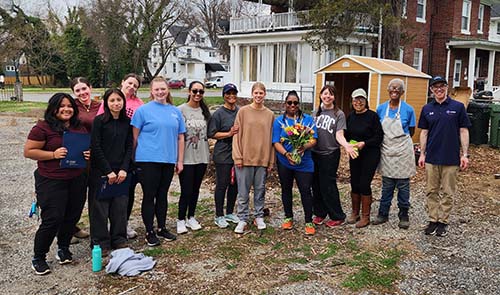
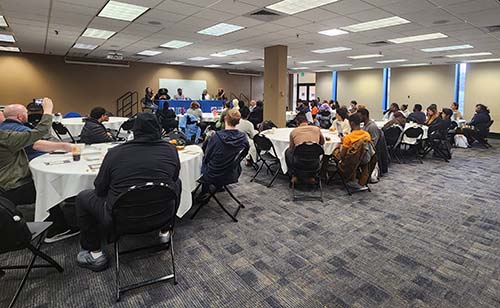
In addition to the research described in this website, other project activities have included service learning projects in the garden at Liberty Grace Church and the Sowing Justice Symposium held at the Catonsville campus on March 28, 2025.