
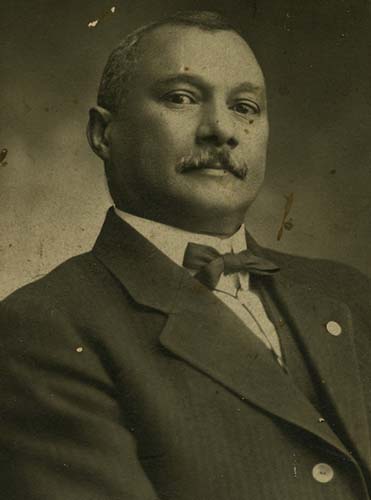
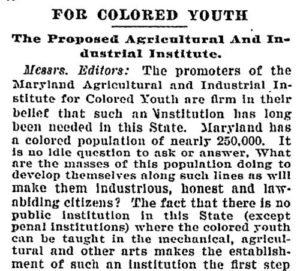
In August 1901, the Baltimore Sun published a letter from Harry S. Cummings, the first Black member of the Baltimore City Council, about the need for a new school in Maryland to teach agricultural and industrial skills to Black students. Cummings, who had long advocated for the improvement of public education for Black children in Baltimore City, suggested that facilities for higher and manual education were working well in Baltimore, but not in the rest of the state. Presumably leaning into the perceptions and concerns of the Sun’s white readership, Cummings remarked that the “greatest curse” afflicting Black people was an idleness that led to criminality. He argued that this could only be corrected through education in agricultural and manual work, which would transform idle people into “useful citizens, contributing their fair share to the welfare of the State.” The letter ended with an appeal to readers to donate money to support the creation of a new school, the Maryland Agricultural and Industrial Institute, under the leadership of Rev. Ernest Lyon.1
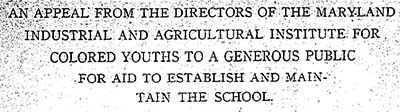
Two months later, Rev. Dr. Ernest Lyon purchased a full-page advertisement in the Afro-American to raise money for the school. His appeal, targeted to a different audience, referenced anxieties related to the migration of Black residents from rural southern states to Baltimore. Noting that the Black population of Maryland was growing quickly, he observed that “the roving population of any people is not always the best element of that people,” and suggested the “stern necessity” of establishing the Maryland Industrial and Agricultural Institute to “relieve the pressure and improve the condition of this population.” The advertisement featured several illustrations of school buildings and facilities that did not yet exist and included the names of more than one hundred people who had endorsed the project, ranging from the mayor of Baltimore, Thomas Gordon Hayes, and former Maryland governor William Pinkney Whyte, to local Black business owners.2
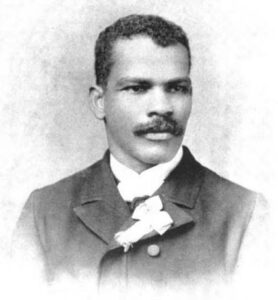
A large amount of space in Rev. Lyon’s fundraising appeal was devoted to listing the names of the many religious leaders who publicly endorsed the school. Lyon was a pastor of John Wesley United Methodist Church in Baltimore City and an instructor in church history at Morgan College, so the emphasis on religious leadership is perhaps not surprising, but the names of the individuals involved reveals that Lyon’s project had the explicit support of key people who comprised a vigorous and long-established activist network rooted in Baltimore’s Black churches.
Four people whose names appear in the fundraising appeal were members of the Mutual United Brotherhood of Liberty, a civil rights organization founded in 1885 by Rev. Harvey Johnson, pastor of Union Baptist Church, along with five other local ministers: William M. Alexander, John Calvin Allen, Patrick Henry Alexander Braxton, Ananias Brown, and W. Charles Lawson. The Brotherhood of Liberty was the first civil rights group in Baltimore, and one of the first in the nation and its mission grew out of a fusion of the scriptural idea that “God has made of one blood all nations of men,” and an insistence that American society should be held to the promise of its founding documents, that “all men are endowed by their Creator with certain inalienable rights.” The Brotherhood of Liberty succeeded in expanding access to public education for Black children in Baltimore, opening the occupations of law and teaching to Black professionals, and eliminating some of the discriminatory “Black Codes” enacted into law in Maryland during Reconstruction.3
The Brotherhood of Liberty established a template for activism grounded in the institutional power of Black churches and attracted many of Baltimore’s religious leaders and their congregations into its projects. In 1906, a second and larger organization, the Baltimore Ministerial Alliance, was established to promote regular communication and coordination between Baltimore pastors who were involved in civil rights work. The names of several people who would later establish the Ministerial Alliance also appear in Rev. Lyon’s fundraising appeal. Their presence signaled that Lyon’s vision for the school was not simply his alone but was consistent with the broader goals of church-based activist networks.
Social Networks of the Maryland Industrial and Agricultural Institute
This social network diagram shows the personal and institutional relationships that connected key individuals who supported the establishment of the Maryland Industrial and Agricultural Institute.
- Resting your mouse on a circle will show connections.
- Double-clicking a circle will display more information.
- The plus and minus buttons allow you to zoom in or out.
- To hide the information panel, click the three gray dots that appear on the right edge of the panel.
Most of the religious leaders who endorsed Lyon’s vision for the school were based in Baltimore City, so their interest in agriculture did not spring directly from the local concerns of their congregations. Instead, they were inspired by the industrial education movement led by Booker T. Washington. “All races that have got upon their feet have done so largely by laying an economic foundation, and, in general, by beginning in a proper cultivation and ownership of the soil,” Washington famously insisted. His work at the Tuskegee Institute in Alabama and his steadfast promotion of farming as the best way to achieve the financial, social, and moral success of Black communities persuaded many people nationwide, including religious leaders. Rev. Lyon was an associate of Washington’s and enthusiastically supported his approach. While certainly not monolithic in their opinions, pastors in Baltimore often agreed with the idea that agricultural livelihoods could build wealth and moral strength in Black communities.4
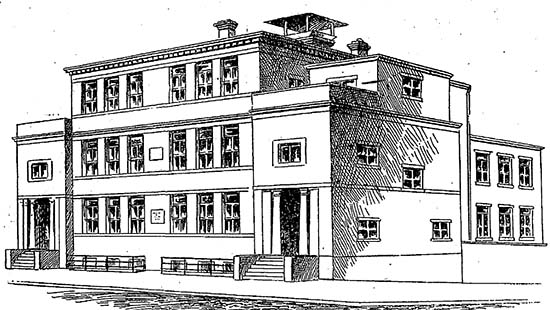
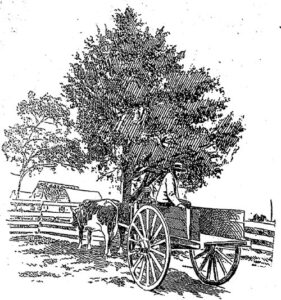
The Maryland Industrial and Agricultural School, unofficially known as the Laurel Institute, opened in October 1901 in North Laurel in Howard County near the Baltimore & Ohio Railroad station. The original school property consisted of eighty-five acres of abandoned farmland with an old farmhouse, which Rev. Dr. Lyon optimistically referred to as the “Administration Building.” Students followed a curriculum that included academic subjects as well as instruction in a trade and could choose from seventeen different specialties, including four different farming options: dairying, poultry raising, truck gardening and agriculture. Tuition was $9 per month and included room and board. Lyon served as the first head of the school before departing in 1903 to serve as the U.S. Ambassador to Liberia. There were two full-time instructors, George W. Clark, a graduate of the Tuskegee Institute, and R.J. Pollard, a graduate of Hampton Agricultural and Industrial School (now Hampton University). At the time, it was common for graduates of these schools to help establish agricultural training programs, sometimes called “Little Tuskegees” as a nod to Booker T. Washington’s mission to extend agricultural education to Black communities throughout the United States and the world.5
R.J. Pollard was the first person hired to teach at the school in 1901 and he later served as its principal starting in 1903. He described his recruitment in an article in the Southern Workman:
I was a waiter at the ‘United States’ in Saratoga when Dr. Ernest Lyon wrote me that Hampton had recommended me for work at Laurel, Md. He requested that I should state salary and preferences as to work in the new enterprise. I wrote him in substance this: ‘If Hampton recommends me, I cannot say no. I will come and help you, and as I am slightly acquainted with you, and fully realize the absolute necessity of such an institution as yours I will not state any salary, but will come and help you as soon as the season closes in Saratoga.’ In consequence, I am here, endeavoring to carry out Hampton’s ideas and to aid, if I can, in the establishment of a Hampton or Tuskegee in Maryland—in the Black Belt of Maryland—as we have styled it. The conditions are pretty bad here, in view of the fact that we find them near such educational centres as Washington, the nation’s capital, Baltimore, the metropolis of the South, and Annapolis, the capital of the Commonwealth of Maryland. The one-room cabins may be seen on the edge of the little city of Laurel and very few own their property anywhere about here. Here and there may be seen a colored farmer, but, if so, he is renting a deserted farm from a white man…All great movements have opposition, and such I have realized here, but I can see a glimmer of light beyond.6
In addition to educating its students, the school sponsored public outreach programs designed to educate Black farmers in the region. During a conference in January 1909, Professor Clark gave a speech that drew an explicit link between effective farming practices and financial autonomy for Black farmers:
For years to come, farming will offer the best opportunity for the masses of our people. As this is true we must keep pace with improved methods. The Negro farmer must raise diversified crops and so manage his affairs that he will close the year with a surplus rather than a debt. We must make every sacrifice to buy the land we cultivate, and we must learn that when we go to market to sell we must bring back something to improve the farm. We must not raise enough to bring us a profit, but we must raise our meat and other things that many of us through negligence, now have to go to market and buy.
At a second conference later that year, a reporter for the Afro-American Ledger observed that “the farmers were here in large numbers, many of them told of how they started with practically nothing and by hard and energetic toil had won success.” Also watching over the conference were Rev. McHenry J. Naylor, representing the Methodist Episcopal church, and “many ministers representing Baptist churches.”7
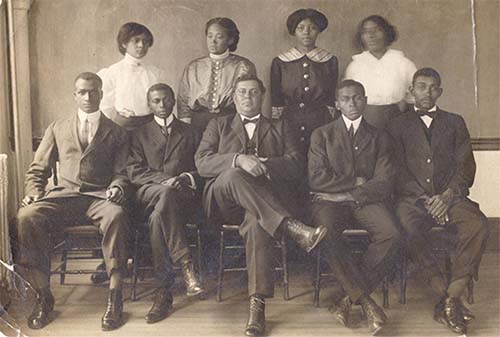
For its first two years, the school maintained itself on donations, but in 1903 the state of Maryland began to provide money annually ($1,000) for its operating expenses. State support for the school continued steadily through 1906 and then sporadically after that. The school brought fifty-three acres into cultivation as an experimental and practical laboratory for its students and raised enough funds to construct a 30-room dormitory. Few student records from the school survived, but a group photo taken in 1909 shows approximately forty students posing with faculty and staff. After 1910, the Maryland Industrial and Agricultural Institute merged with the Bowie Normal School, which later became the Maryland Normal and Industrial School at Bowie. The farm portion of the operation was relocated from Laurel to Bowie and eventually the agricultural program was consolidated into what is today known as Bowie State University.8
Booker T. Washington and the industrial education movement he inspired have often been criticized for the conservative nature of their vision. Although he insisted otherwise, Washington’s preference for manual labor training suggested accommodation to the restrictions of white supremacy, a narrowing of occupational aspirations rather than an expansion of ambition. At the same time, many critics perceived that the emphasis Washington and his followers placed on hard work, thrift, and Christian moral values was an insufficient response to the entrenched structural inequalities Black communities were facing. From that perspective, support for agricultural education among Baltimore’s clergy could be viewed as a lukewarm effort to improve the lives of rural farmers without much risk of provoking white people.
However, in his analysis of Washington and the Tuskegee Institute, historian Jarvis McInnis urges us to be more generous in how we think about the Tuskegee model and to consider the complex practical, intellectual, and even spiritual work involved in reimagining the land, once a site of trauma and dehumanization, as a resource that could nurture and advance Black ambition. From this perspective, early twentieth century experiments in reclaiming the land to further the goals of Black autonomy should be recognized as bold and also as important foundations for the food sovereignty movement of today.9
Notes and Bibliography
- Harry S. Cummings, “For Colored Youth: The Proposed Agricultural and Industrial Institute,” Baltimore Sun, Aug. 1, 1901: 5. Many aspects of the history of the Maryland Industrial and Agricultural Institute remain murky. The 1903 Annual Report suggests that Lyon started the school with “his own money,” see “Annual Report,” Afro-American, Jun. 20, 1903: 4. In their public communications, Harry S. Cummings and Ernest Lyon used different names for the school, reversing the order of the words industrial and agricultural. It is unclear whether this represented a marketing strategy for different audiences or if the name of the school was fluid. Once established, the school was informally known as the Laurel Institute. For more about Harry S. Cummings’ political career, see Suzanne Ellery Greene, “Black Republicans on the Baltimore City Council, 1890-1931”, Maryland Historical Magazine 74 (September 1979): 203-22. ↩︎
- Ernest Lyon, “An Appeal from the Directors of the Maryland Industrial and Agricultural Institute for Colored Youths to a Generous Public for Aid to Establish and Maintain the School,” Afro-American, Oct. 12, 1901:2. ↩︎
- Dennis Patrick Halpin, A Brotherhood of Liberty: Black Reconstruction and Its Legacies in Baltimore, 1865-1920, University of Pennsylvania Press, 2019: 41. ↩︎
- Booker T. Washington, “Industrial Education for the Negro,” In The Negro Problem: A Series of Articles by Representative Negroes of To-Day, pp. 9-28. James Pott & Co, 1903. https://archive.org/details/cu31924073631339/page/n18/mode/1up?view=theater: 10. Rev. Harvey Johnson is a notable example of an influential figure who did not agree with Booker T. Washington or the idea of agricultural education. He appears to have withheld his support for the project even as other members of the Brotherhood of Liberty endorsed it. Ernest Lyon benefited directly from his loyalty to Booker T. Washington. Lyon was appointed U.S. Ambassador to Liberia after Washington recommended him to President Theodore Roosevelt. ↩︎
- “Plan Negro School,” The Colored American 9, no. 14, Jul. 6, 1901: 1; “The Laurel Agricultural and Industrial Institute,” Afro-American, Apr. 16, 1910: 6. The label of “Little Tuskegee” was used by Booker T. Washington and others associated with the Tuskegee Institute. In addition to schools in the United States, Little Tuskegees were created in Cuba, Haiti, Jamaica, Guyana, Montserrat, South Africa, Liberia and elsewhere, see Jarvis C. McInnis, Afterlives of the Plantation: Plotting Agrarian Futures in the Global South, Columbia University Press, 2025: 29. ↩︎
- “Notes From the Field,” Southern Workman 31, no. 7, Jul. 1, 1902: 407. https://virginiachronicle.com/?a=d&d=SWM19020701.1.43. ↩︎
- “Farmers’ Conference,” Afro-American, Jan. 9, 1909: 1; “Farmers’ Conference,” Afro-American Ledger, Jun. 12, 1909: 5. ↩︎
- “Annual Report,” Afro-American, Jun. 20, 1903: 4; “850,000 for State Aid,” Afro-American, Jan. 12, 1904: 12; “Requests for State Aid,” Afro-American, Jul. 12, 1907: 7; “Practical Education,” Afro-American, May 30, 1903: 4; “To Educate Head and Hand,” Afro-American, Mar. 20, 1909: 3. ↩︎
- McInnis, Afterlives, 1. ↩︎
Written by Nina Brown; last updated June 2025